
Winnie Winkle the Breadwinner (original comic strip) by Martin Branner
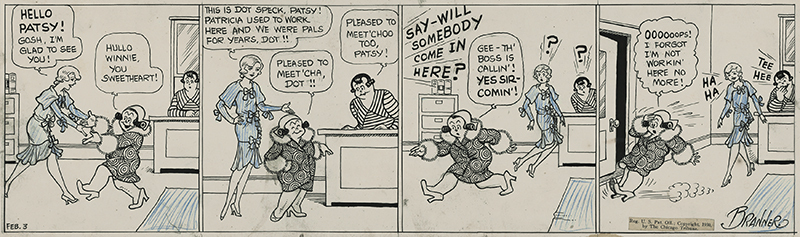
Winnie Winkle the Breadwinner (original comic strip)
Martin Branner
Winnie Winkle the Breadwinner (original comic strip)
Martin Branner
1888 - 1970 (biography)On his return, he pursued a career as a comic strip artist, and in 1920, he debuted Winnie Winkle the Breadwinner with permission from publisher Joseph Medill Patterson, who originally conceived of Winnie Winkle. Branner modeled the main character on Edith, and some of the gags featured in the strip came from stunts the two of them developed in their stage acts.
Comics about working women were still new. Winnie Winkle was only the second, after Somebody's Stenog, to feature an unmarried working woman, in this case caring for her aging parents. It proved to be popular, and by the end of the 1930s it was syndicated in 125 American and European newspapers. Winnie Winkler would become a reflection of the changing sociopolitical landscape for women, becoming a pregnant war widow and, later, joining the Peace Corps.
Branner drew the comic until 1962, when he suffered a stroke. At that point it was taken over by his longtime assistant, Max Van Bibber. The strip continued until 1996, for a total of seventy-six years. The Smithsonian National Museum of American History holds twenty-eight volumes of Winnie Winkler proofs.