
El Velorio by Gustave Baumann
El Velorio
Gustave Baumann
El Velorio
Gustave Baumann
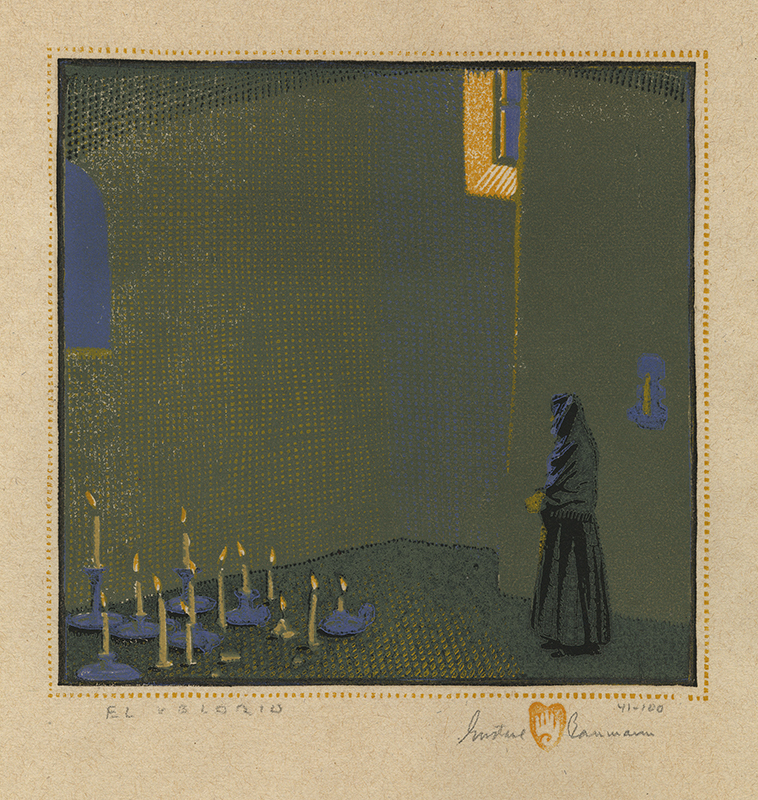
1881 - 1971 (biography)This impression of El Velorio is opaquely printed in rich, vibrant colors. At the time of this first printing campaign, Baumann was using oil as the vehicle to mix his ground pigments and, as a result, the colors are saturated and brilliant. In 1927, Baumann projected his editions at 120 rather than 100, as was the case with this impression, and this switch caused a few editioning nightmares for the artist and his cataloguers.
This impression is from the first of two editions Baumann did of this subject and is one illustrated in the catalogue raisonné. It was printed in five colors in 1927. Gala Chamberlain comments about this printing on pages 337 and 338 of "In a Modern Rendering...":
"Opaquely printed inks add to the stillness and silence of the scene. An impression from the Baumann estate (this impression)... has the addition of a dark blue arched alcove at the left of the image, and the high window has a dark sash..."
"An impression mistakenly numbered "41/100" (the block-lettered title and the style of the edition number suggest that both were added by the artist at a later date) is very dark in coloration, seemingly illuminated only by the the sunlight from the high window...A solid line forms the interior border, and a dotted line forms the exterior border."
Baumann was fascinated by the various cultures in the southwest and their religious practices. In 'El Velorio' he depicts a Spanish woman with head covered in reverence before a dozen or so candles lit for the soul of the dead.
In other woodcuts relating to ceremonials or religions, he depicted a Penitente ceremony, Spanish Santos, and Hopi Kachinas.
El Velorio is representative of Baumann’s profound respect for the cultures and religions of the Southwest. In his manuscripts, Baumann wrote: "When about a century ago we found ourselves in material and cultural possession of the Southwest it proved to be a paradise for both Archeologist and Ethnologist. People not only had lived here long ago but other people were still living here minding their own business as well as they might with the cultural mores of Spain and Mexico as their heritage. As a latecomer, a white man and an Artist interested in life I too had an insatiable curiosity about the Southwest and its people—how they lived, loved and worshiped."