Hollywood Car by George von Physter
Hollywood Car
George von Physter
Hollywood Car
George von Physter
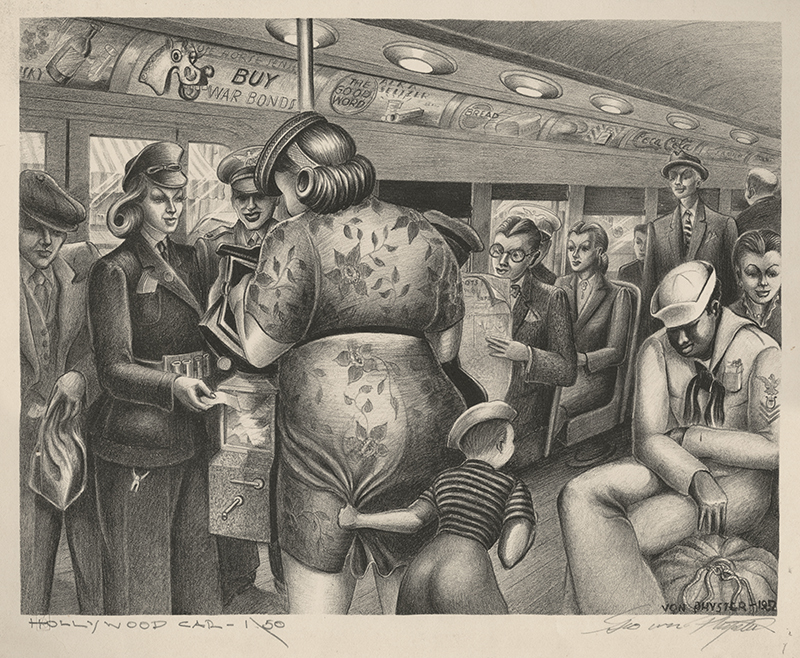
1909 - 1986 (biography)"Hollywood Car", lithograph, 1952, 11-1/4 x 16 inch image size. It is stone signed and dated within the image in the lower right and is pencil signed, titled, and editioned "1/50" by the artist in the lower margin. This image was printed by the artist and Los Angeles Master Printer Lynton Kistler on a heavy, antique-white wove paper that measures 18-1/4 x 22-1/2 inches.
Created after the artist's drawing "Women in Industry No. 3" which was possibly a preparatory drawing for an early WWII advertising project that never came to fruition (a sign on the car exhorts the public to "Use Horse Sense / Buy War Bonds". In the 1940s during the war, when women went to work in what had traditionally been mens' jobs and the government was advertising the fact but, when the war ended and the men came home the women, for the most part, were let go to return to being "homemakers". This image depicts a train or bus car, filled with passengers. A uniformed ticket taker stands at her station as a mother, whose son holds on to her dress for stability, searches through her purse for the fare. There are slight differences in the figures between the drawing and the lithograph (note the woman seated near the back). An African-American sailor with his seabag catches a quick nap in the foreground.
"Hollywood Car" was a collaboration between von Physter and Los Angeles Master Printer Lynton Kistler in 1952, the idea being to print an edition of 50 in an attempt to monetize the composition of his drawing from the 40s. The original title no longer applied, so the work was likely re-titled as "Hollywood Car" in an attempt to glamorize the image for the public during a period when Hollywood was becoming a more integrated part of American culture. Whether the edition was completed is not known, the image is scarce.