
Interior of Kings Chapel, Cambridge by Emile Antoine Verpilleux

Interior of Kings Chapel, Cambridge
Emile Antoine Verpilleux
Interior of Kings Chapel, Cambridge
Emile Antoine Verpilleux
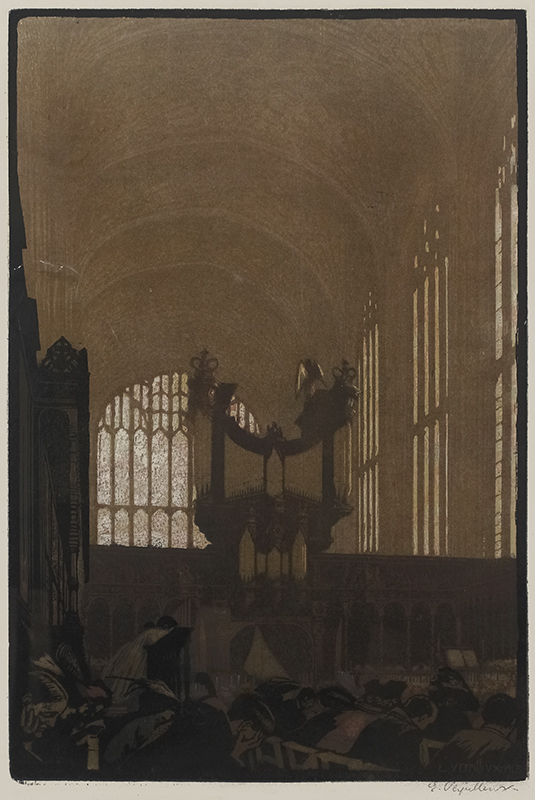
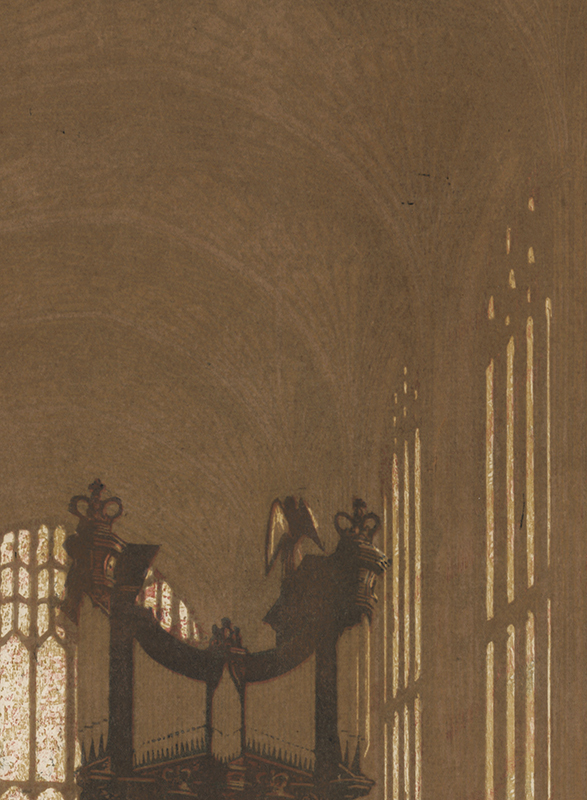
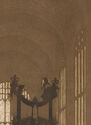
1888 - 1964 (biography)The King's College Chapel is among the most famous structures in Cambridge, UK. Built five years after the school's founding by King Henry VI, it took five monarchs between 1446 and 1547 to complete and is the oldest surviving building on the campus. Its most celebrated feature may be its extraordinarily delicate "fan" vaulting of the Nave, the largest of its kind in the world, shown here in the upper two thirds of Verpilleux's color woodcut.
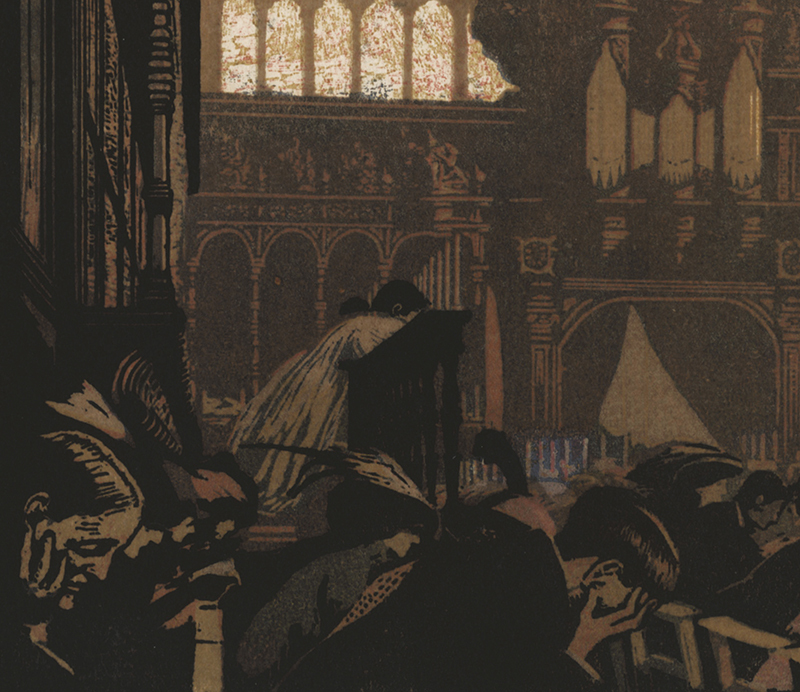
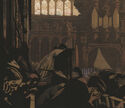
Also depicted is the "rood screen," an intricately carved wooden structure that supports the organ, shown at the center of the composition. Built beginning in 1532 to celebrate the marriage of King Henry VIII and Anne Bolyn, their intertwined first initals H and A are carved throughout. Interestingly, after he had his wife executed in 1536, Henry attempted to have all traces of her erased from his properties; this appears to be one of the few monuments that was left untouched.
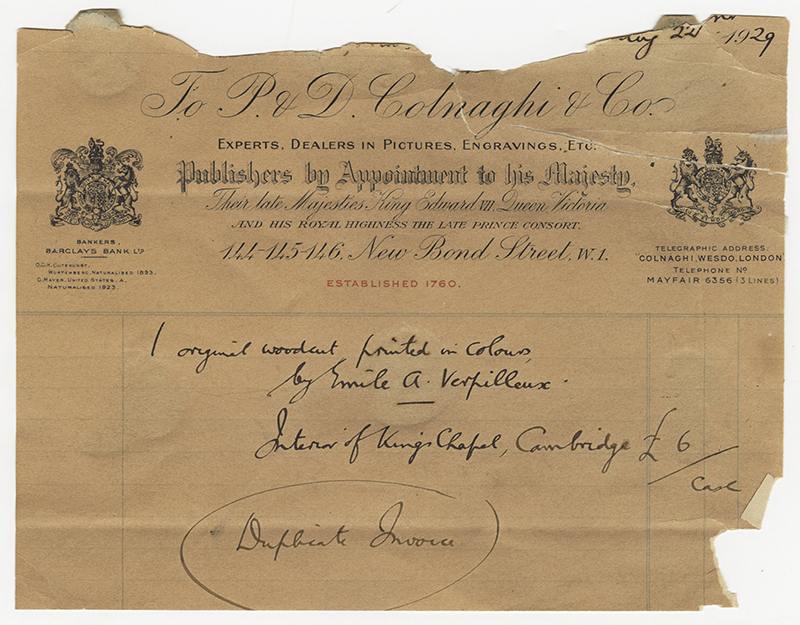
1913 was a pivotal year for Verpilleux whose many years of consistent work in color woodcut finally paid off. After being taken on by Colnaghi and Oban Publishers, who commissioned color woodcuts of noted English landmarks, he was given a highly favorable review by The Studio magazine's James Bolivar Manson. Thereafter, he was an established and sought-after artist with international accolades, whose would be the first artist to have a color woodcut hung in London's Royal Academy of Arts.