
Poudre Bleue Antiseptique de la Famille (after Firmin Bouisset) by Christophe Adrien (Count) Regley de Koenigsegg
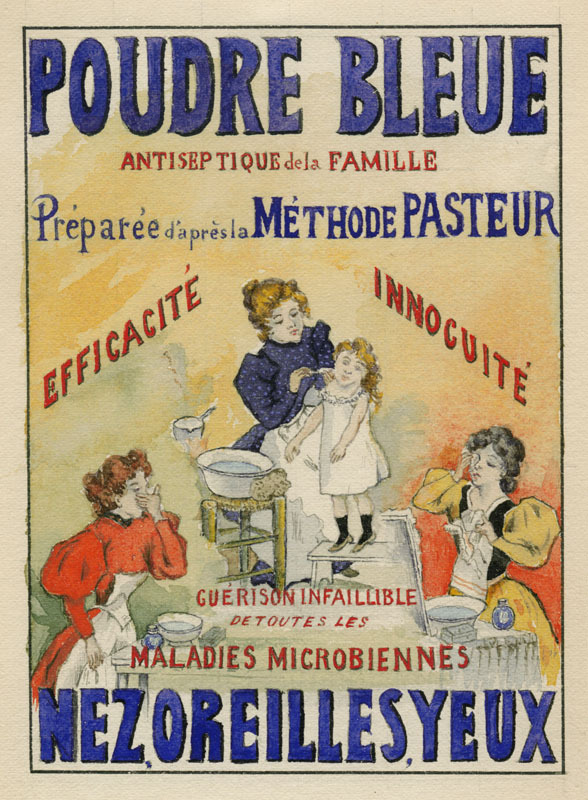
Poudre Bleue Antiseptique de la Famille (after Firmin Bouisset)
Christophe Adrien (Count) Regley de Koenigsegg
Title
Poudre Bleue Antiseptique de la Famille (after Firmin Bouisset)
Artist
Year
c. 1895
Technique
watercolor
Image Size
5 x 3 5/8"
Signature
not signed, as usual
Edition Size
1 of 1 unique
Annotations
"d'apres Firmin Bouisset" in ink on tan wove backing sheet, lower right
Reference
Paper
white wove
State
Publisher
Inventory ID
13174
Price
$400.00
Description
After the poster advertisement for Poudre Bleue (Blue Powder) antiseptic powder, designed by French painter and graphic artist Firmin Bouisset (1859-1925). The text loosely translates to: "Family-size antiseptic blue powder, prepared according to the Pasteur method. Infallible cure. Microbial diseases. Nose, Ears, Eyes."
This advertisement heralds the beginning of the wide-spread acceptance of anaesthetic theory. Prior to the 1860s, one was more likely to die from infection after an otherwise successful surgery than on a battlefield, and with the onset of the Civil War and other deadly battles, many doctors and scientists were eager to find a cure. Studies by surgeon Joseph Lister (Scottish: 1827-1912) and microbiologist Louis Pasteur (French: 1822-1895) led to the theory of germs, and of their irradication through direct application of a substance and by creating a sterile surgical environment to help improve chances of survival. In the 1890s, iodized compounds and powders with calcium carbonate were among the earliest form of antiseptic available for purchase to the public.