Max Westhäuser Biography
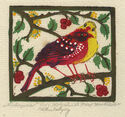
Max Westhäuser
German
1885–1958
Biography
Painter and printmaker Max Westhäuser was born in Hildburghausen, Germany on December 9, 1881. Following his secondary schooling, he apprenticed as a glass painter in Bielefeld from 1900 to 1904 before focusing on painting under Ludwig Godewols. In 1907, he enrolled the new Bielefeld School of Arts and Crafts. It was there that Westhäuser was exposed to lithography and other forms of printmaking.
Following his studies he began working as a freelance painter and graphic artist, and in 1909 cofounded the modernist art group Rote Erde (Red Earth). The Westpahlia-based association included Peter August Böckstiegel, Erich Lossie, Heiz Lewerenz, Ernst Sagewka, and Victor Tuxhorn. Of particular focus was Expressionism, which was gaining traction in Europe. At this time and through the early 1920s, Westhäuser's work was primarily in printmaking, including lithography and woodcut. In 1912 he enrolled in the Academy of Fine Arts in Breslau and opened a painting business with a fellow student. This proved short lived, however, with the advent of World War I and his subseqent draft.
Following his tour of duty, he returned to Bielefeld where he would remain for the rest of his life. He took some time to process his experiences in war through his art, including a 1919 woodcut titled "People's Orator," condemning the predatory nature of preaching to desperate people. In 1924 he held his first solo exhibition at the Bielefeld Art House. By the end of the 1920s he'd turned his attention to watercolor and essentially abandoned printmaking, as well as politically challenging subjects, focusing on landscapes. He continued to work in the Rote Erde group as well as the Association of Westphalian Artists and Art Lovers, with whom he exhibted throughout the 1930s.
When the Nazi Party rose in power in Germany, Westhäuser's Expressionst work was declared "degenerate" and in 1937 four of his woodcuts were confiscated from collections and destroyed by Party members. Despite or because of this, he became a member of the Reich Chamber of Fine Arts until he was drafted once again into war. In 1944 his studio was bombed and much of his work was lost.
Following the war, Westhäuser continued to work as a watercolorist and raised a family with his second wife, Freida. He died in Bielefeld on March 15, 1958. His work is held in the Bielefeld Municiple Art Museum, the Gelsenkirchen Municiple Art Collection, and the Böckstiegel House museum in Germany.