Eugene Joors Biography
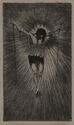
Eugene Joors
Belgian
1850–1910
Biography
Painter and printmaker Eugene Joors (also: Eugeen Joors) was born in Bergerhour, Antwerp, Belgium on February 22, 1850. Before beginning his academic art training, he apprenticed with engraver Jean Baptiste Michiels. He then attended the Royal Academy of Fine Arts, Antwerp from 1865 to1870, studying under Polydore Beaufaux, Nicaise de Keyser, and Jozef Van Lerius. It was here that he developed his signature classical style, focusing on still lifes, genre scenes, and portraiture. His rendering of textures and rich colors in his still lifes were especially admired, and he would later be knighted in the Order of King Leopold as one of Belgium's most celebrated colorists.
Joors was a member of the Als ik Kan and De Scalden art groups. He exhibited regularly throughout Antwerp and abroad, beginning with his debut at the Antwerp Salon in 1879. In 1881, he assisted Charles Verlat in the execution of his 120 meter-wide panorama, Battle of Waterloo (which has since been lost). In 1895 he was included in the Stedelijk Museum Amsterdam's "Exhibition of Works by Living Masters," and in 1889 he was awarded a gold medal at a prominent Munich exhibition where his painting, "Amazone," was purchased by Prince Regent Luitpold of Bavaria. Joors also had a career as a professor of painting, and began teaching still-life painting at the Academy beginning in 1886.
Eugene Joors lived for the last ten years of his life in Berchem in the "House de Tulp," an Art Nouveau house and workshop designed for him by architect Jules Hofman. There he died on October 23, 1910. A street in his hometown of Brogerhout, the Eugeen Joorstraat, was later named for him.