
Louis Favre Biography
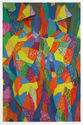
Louis Favre
French
1892–1956
Biography
Louis Favre, painter, printmaker, illustrator, writer, and designer, was born on 15 September 1892 in Annemasse, France. He moved to Paris in 1912 and, despite being completely self-taught, began his career as a surveyor, then turned to industrial design before committing himself to painting. Favre was mobilized during the first World War and was wounded during the 300-day battle at Verdun. After the war, in 1919, he returned to Paris where he met Gertrude Stein who purchased a few of his paintings. In 1927, Favre visited Morocco and held his first solo exhibition that year at ‘Au Sacre de printemps' gallerie in Paris.
In 1946, Favre shifted his focus once again and took up color lithography. He exhibited his first lithograph that year at the Exposition Gravures Francaises Contemporaines in Berlin. In 1948, an exhibition of his work was mounted at the Victoria and Albert Museum in London. His color lithographs were shown at the Redfern Gallery in New York in 1951 and, in 1954, he was included in Venice Biennale as well as the Third International Biennial of Contemporary Color Lithography at the Cincinnati Art Museum. Louis Favre: a world full of color, opened at the Nederlands Steendruk (Dutch Museum of Lithography) in 2023.
Favre illustrated Une Saison en enfer by Arthur Rimbaud (1948) and La Corbeau by Edgar Allen Poe (1949). The work of Louis Favre is represented in the Baltimore Museum of Art, Maryland; the Cincinnati Art Museum, Ohio; the Victoria and Albert Museum, London; the Hammer Museum, UCLA Grunwald Center for the Graphic Arts, Los Angeles, California; and the Rhode Island School of Design Museum, Providence.
Louis Favre died in Annemasse, France on 17 April 1956.