
Emile Bernard Biography
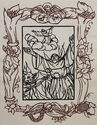
Emile Bernard
French
1868–1941
Biography
Painter and graphic artist Émile Henri Bernard was born on April 28, 1868 in Lille, France. When his younger sister was born with a serious health condition that required constant care, Bernard was sent to live with his grandmother. A prosperous laundry owner, she was able to afford to send him to the Ecole des Arts Decoratifs in Paris beginning in 1884. While there, Bernard studied in the studio of Fernand Cormon where he was introduced to the burgeoning Impressionism and Pointillism genres.
He then enrolled in courses at the Ecole des Beuax-Artes where he befriended Henri de Toulouse-Lautrec and Louis Anquetin. In a move against Neo-Impressionism, he and Anquetin developed a style that would become known as Cloisonnism, outlining the subjects of their paintings in dark, defining lines. Ironically, Bernard was suspended from the school for "showing expressive tendencies in his paintings," a reactionary stance by the school that hints at their awareness of growing dissatisfaction with the status quo. Bernard took to the road, touring Brittany on foot to immerse himself in the region's culture and landscapes. It was during this sojourn in 1886, while in Pont-Aven, that he briefly met Paul Gaugin. They would later become close friends and then creative rivals, with Bernard claiming that his own style was the main influence on Paul Gaugin's pictorial symbolism.
In 1888 Bernard returned to Paris and enrolled in the Academie Julian. Here he met Vincent van Gough, who had already admired Bernard's work and had gone so far as to copy Bernard's oil painting, "The Pardon," in watercolor for his brother, Thoedorus van Gogh, to encourage promotion of Bernard's work. Bernard and Van Gough soon organized a show with Anquetin and Toulouse-Lautrec on the Avenue Clichy. Van Gough dubbed their group the School of Petit-Boulevard.
By 1891 Bernard had become disillusioned by the rivalries among himself and his friends. Particularly, Gaugin's refusal to give credit to Bernard for their shared influence. He began to explore Symbolist themes instead, finding inspiration in the work of Odilon Redon and Ferdinand Hodler. He then spent the next decade traveling throughout Egypt, Italy, and Spain, where his work became more eclectic. In 1904 he returned to Paris, where he took a teaching position at the Ecole des Beaux-Arts for several years. He died in Paris on April 16, 1941.