
Maxime Lalanne Biography
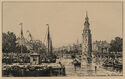
Maxime Lalanne
French
1827–1886
Biography
Printmaker and charcoal artist Francois Antoine Maxime Lalanne was born November 27, 1827 in Bordeaux, France. His formal education began at l'Institution Oré, studying classical drawing under architect Jules Saulnier and earning his Bachelor of Letters degree in 1848. Despite a natural talent for and interest in art, he pursued a career in law.
He continued to draw in his spare time while clerking as a notary, and in 1850 he entered six works into the 8th Exposition of the Philomathique Society, earning a bronze medal. The newpaper La Tribune, writing about the event, gave Lalanne a favorable review, and fellow artist Léo Drouyn encouraged him to continue to pursue art. After traveling for a time and creating drawings on the road, he returned to Bordeaux and received more accolades from from his friends and family. He was urged once more to abandon law for a career in art.
In 1852 Lalanne moved to Paris to pursue his new career, taking lessons at the studio of Jean Francois Gigoux and entering two charcoal drawings into the Paris Salon - a newly added medium for the famed exhibition. His artistic reputation quickly flourished, and the following year he held his first show of lithographs. In 1862 he became a founding member of Alfred Cadart's Societe des Aquafortistes and was one of the first to have his work published under its auspices. In 1863, Lalanne entered the Salon to debut in yet another medium, this time in etching.
Though he would never again live in Bordeaux, his ties to his hometown remained strong and he was given a retrospective of 640 works in 1874. He would then donate all of the sales of his etchings to the city in 1875 and again in 1882.
Among his awards and recognitions were medals for his work from the Salon in 1866, '73, and '74; was decorated as Chevalier de la Legion d'Honnuer in 1875; and knighted into the Order of Christ by King Fernando of Portugal - himself a member of Societe des Aquafortistes. Even as the popularity of classical and Romantic imagery faltered in favor of Impressionism, Lalanne's work was celebrated by major artistic circles and continued to be accepted into the Salon well into his later years.
After a long battle with a degenerative bone disease, Maxime Lalanne died on July 29, 1886; according to some sources, with charcoal still in hand.