
Max Pollak Biography

Max Pollak
American
1886–1970
Biography
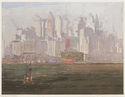
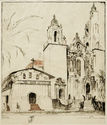
Max Pollak, painter and printmaker, was born in Prague, Czechoslovakia on February 27, 1886. While an infant, his family moved to Vienna, Austria where he was raised. In 1902, at sixteen years-of-age, he entered the Vienna Academy of Art where he studied painting and printmaking under William Unger and Ferdinand Schmutzer. He won the prestigious Prix de Rome for an etching in 1912, the first etcher to do so when all previous recipients were painters. That same year, Pollak traveled to France and Holland to study and paint. During the First World War, he was appointed official painter of the Austrian Army and documented the stark landscapes where his battalion was stationed. Pollak was anti-war and would frequently chronicle the prisoners of war and war refugees. He produced a portfolio of etchings, Im Barackenlager Nikolsburg, which illustrated the daily denigration of the Galician Jews who were forcefully relocated to barracks in Nikolsburg, Moravia. For this he was punished by the government and sent to work making casts of war machinery in a factory.
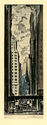
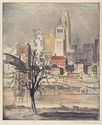
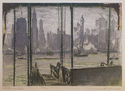
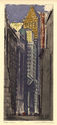
On December 4, 1924, Max Pollak married Friederike "Friedl" Knedel, daughter of Arnold Knedel and Bertha Schweinburg, who was born in Vienna in March of 1898. According to the article by Blake Green, the Pollaks immigrated to the U.S. under the auspices of Edward Bernays, a nephew of Sigmund Freud. They arrived in New York on December 15, 1927. Pollak explored his new city and rendered many local places in etching or drypoint.
His first exhibition was mounted at the 57th Street Art Gallery in New York in 1928. The show was a commercial success and he was commissioned by Theodore Dreiser in 1929 to illustrate his book, My City, which included reproductions of eight of Pollak's color aquatints of Manhattan. In 1930, Richard Gump of the noted San Francisco mercantile family invited Pollak to have an exhibition at Gump’s Department Store. For this visit the Pollaks settled in the Fairmount Hotel and after the exhibition they continued with world travels.
In 1938, Max and Friedl returned to Vienna and were horrified by what they witnessed. They decided to leave Vienna forever but, before their departure, the Nazi confiscated 500 of Pollak’s copper printing plates to melt down for their war efforts. Max and Friedl left their hometown and moved to San Francisco, California. Pollak was inspired by his new city and its environs and produced views of San Francisco neighborhoods, the Golden Gate Bridge, and Sausalito. Later travels included frequent trips to Mexico and Guatemala in the 1930s, '40s, and '50s.
Pollak was equally facile working in drypoint, aquatint, and soft ground etching. One of his specialties was portraiture and he produced a number of drypoints of noteworthy people and dancers throughout his career, among his most famous a 1914 portrait of Sigmund Freud at his desk surrounded by his antiquities. Freud would later become his friend and purchased several works by his fellow Austrian.
Pollak’s graphic oeuvre is comprised of over 500 prints for which he won numerous awards, including the Chicago Society of Etchers prize in 1942, and the California Society of Etchers awards in 1942, 1944, and 1945. Pollak exhibited at the Golden Gate International Exposition in 1939 and had numerous solo exhibitions, including a 1930 show at Gump’s in San Francisco, a 1940 show at the California Palace of the Legion of Honor, a 1953 retrospective exhibition at the de Young Museum, and a 1973 exhibition at the Triton Museum in Santa Clara. He was a member of and exhibited with the Chicago Society of Etchers, the California Society of Etchers, and the Prairie Printmakers. Early in his career Pollak’s work was included in the following exhibitions: the Urban International Exhibition of Artworks by Living Artists, Stedelijk Museum, Amsterdam, April 13-17, 1912; the Annual Exhibition of Art Union for Bohemia, Rudolfinum, Prague, April-May, 1913; and the Exhibition of the Association of Visual Artists, Secession Building, Austria Secession, Prague, January-February, 1914.
Max Pollak’s work is represented in the collections of the Judah L. Magnes Museum, Berkeley, California; the Jordan Schnitzer Museum of Art, University of Oregon, Eugene; the British Museum, the Victoria and Albert Museum, and the Freud Museum, London; the Metropolitan Museum of Art and the New York Public Library, New York; the Oakland Museum of California Art; the Princeton University Art Museum, New Jersey; the Fine Arts Museums of San Francisco, California; and the National Gallery of Art and the Smithsonian American Art Museum, Washington, D.C.
Max Pollak died in Sausalito, Marin County, California on May 29, 1970.
*Note: Blake Green’s article “Artwork Etched in History” was published in the San Francisco Chronicle on February 2, 1986.